
STARTING A BUSINESS AND PROJECT: WHAT DO I NEED TO GET STARTED WITH MY COMMUNICATION AND ESTABLISH MY BRAND IMAGE?
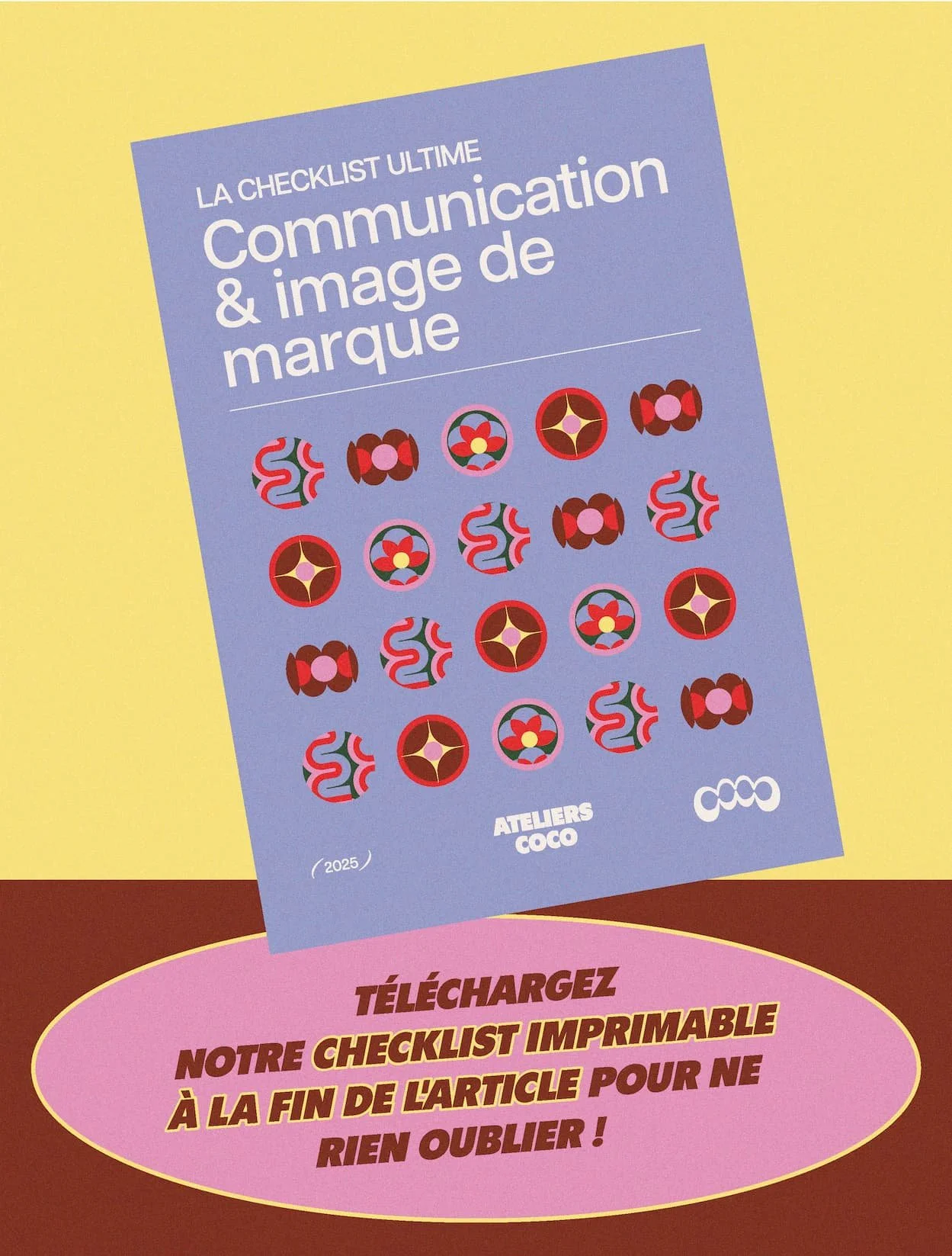
THE ULTIMATE CHECKLIST
When you're starting a new project, you often think about your offerings, legal setup, and finances. But what about your brand image? It's actually your brand image that establishes the groundwork for your communication, builds trust, and helps you stand out in a positive way.
Ateliers Coco has therefore prepared the ultimate checklist for you to complete, ensuring you start on a solid foundation. Think of it as a creative toolkit, designed for brands and businesses that want to approach things strategically and consistently.
AN ARTICLE THAT EXPLAINS,
A CHECKLIST THAT SUMMARIZES!
STEP #1: Lay the foundations
with brand strategy & branding
This is the part that is often skipped, but it is essential. Before even talking about logos or business cards, you need to knowwho you areandwhat you want to convey. To help you with this, we have listed all the points to consider in order to build a solid foundation.
YOUR BRAND OR COMPANY NAME
The perfect cocktail is: a memorable name that aligns with your brand universe and is available (particularly as a domain name). It should be meaningful or easily recognizable. Ideally, to guarantee its uniqueness, it should not be used by your direct or local competitors.A CLEAR PITCH FOR YOUR BUSINESS
In one or two sentences, summarize who you are, who you work for, and what you offer. This short text is a valuable tool: you can use it everywhere—in your Instagram bio, when speaking, in your emails, presentations, or marketing materials.Example:
Ateliers Coco is a graphic design studio specializing in visual identity, websites, and publishing, dedicated to businesses and small retailers that need creative, impactful, and consistent communication.YOUR VALUES
The pillars of your vision. Those that bring you added value, set you apart from your competition, are important to you, and that you want to share with your customers.
Example : authenticity, innovation, local roots, accessibility...
These values will help you make decisions and address your audience with sincerity. This is often the starting point for creating good storytelling.
KEY ELEMENTS OF YOUR BRANDING:

YOUR TARGETAUDIENCE
Who are you addressing? Understanding your ideal customer, their issues, lifestyle, and expectations is essential for creating impactful communication that will be meaningful and reach your potential customers. This will allow you to learn the codes they are familiar with and use them to share your messages.YOUR POSITIONING AND DIFFERENTIATION
Why you? What do you do better or differently? What makes you unique compared to competitors? Answering these questions will help you define or strengthen your sales message, directly impacting how you communicate these aspects.YOUR COMPETITION
Knowing your industry's standards allows you to take a strategic stance: either embrace certain benchmarks or boldly challenge them. The goal here is to analyze what works for your peers, helping you decide what to emulate and what to avoid. This will provide a solid foundation and a clearer understanding of your market and what your clients expect.YOUR TONE AND VOICE
Determine how you express yourself: is your language formal, casual, technical, or poetic? Your tone is part of your identity and must align with your target audience.
Example : If you're addressing lawyers, the natural approach would be to use a professional and formal tone, perhaps even technical depending on your offering. Conversely, in most situations, a very casual or informal approach would likely not be appropriate.YOUR KEY MESSAGES
What messages do you need to convey? Do you want to highlight your expertise, your ethics, or your personality? These messages will guide all your content and should be developed based on your objectives.
Examples :— If I want to sell my services: I will share messages showcasing my expertise.
— If I want to build client trust: I will share messages telling the company's story and the values it stands for.
— If I want to sell: I will share messages listing all the benefits of my product, whether it's its manufacturing, concept, price, and so on.
STEP #2: Create a recognizable universe
— with visual identity
This is the first thing people see, what makes your brand visually 'alive' and unforgettable. It needs to be consistent, clear, and reflect what you've established just before.

Logotypes, Pictograms, and Graphic System for Ornements, by Ateliers Coco.
THE ESSENTIAL ELEMENTS
OF VISUAL IDENTITY
THE GRAPHIC CONCEPT
This is the overall idea behind your identity: inspiration, style, references, atmosphere. It must be aligned with all the points mentioned above, in short, your entire communication/branding strategy.THE MAIN LOGO (+ ITS VARIATIONS)
A good logo design must meet two criteria above all else.
#1 It must be functional: legible and suitable for all formats and media (both digital and print).
#2 It must be aesthetically pleasing, serving as the signature of your brand universe.
KEY POINTS: A logo is not a catch-all that is supposed to tell the whole story on its own. It is your signature, a concentrated form of your graphic universe. What makes a brand image strong and consistent is the overall visual identity: the colors, the typography, graphic principles... Each of these elements plays an essential role, and it is their combination that makes your brand recognizable, credible, and memorable.THE COLOR PALETTE
Choosing consistent colors means establishing a color palette that is consistent with your message and brand strategy. A good palette should be legible, accessible, and have sufficient contrast. It should also be suitable for both digital and print media, because yes, they are not always the same thing!
TYPOGRAPHY
Having a good typographic palette is also essential. Main font(s) for titles, body text, and accents. The choice must be legible, harmonious, and, once again, consistent with your brand identity and strategy.
ICONOGRAPHY AND/OR PICTOGRAMS
These elements are not mandatory but are useful for enhancing the visual universe or facilitating reading.
THE GRAPHICS SYSTEM
This principle represents the recurring visual codes to be implemented: photo framing or processing, standard layouts, textures, etc.
This is when templates can be implemented.ARTISTIC DIRECTION OF VISUALS
Photographs, illustrations, patterns, textures...
This is the recommendation for the overall look of your project's iconography, which contributes to the overall visual atmosphere.THE GRAPHIC CHARTER (OR USAGE GUIDE)
It's your graphic communication bible! It's THE document that brings together all the rules for using your identity. Possible or prohibited uses, examples... It's essential for maintaining consistency, especially if several people are producing materials for your brand, or if you're not familiar with graphic communication.
The goal isn't just to make something look nice. It's about establishing a strong identity that can withstand time, trends, and various channels (both print and digital), and that is functional in its everyday use.
Need help creating a custom identity that is
strong and functional?
STEP #3: Presenting Yourself to the World
— with Communication Materials
Is your brand strategy in place, and your visual identity too? It's time to create the essential materials to communicate about yourself clearly, professionally, and with style.

Digital Catalog (brand file) created for Maison Tassan by Ateliers Coco.
(NON-EXHAUSTIVE LIST)BUSINESS CARD
Yes, even in 2025! Useful for trade shows, informal meetings, or sending in a package.EMAIL SIGNATURE
Professional and consistent: name, job title, logo, links, brand colors.PRESENTATION OF YOUR OFFERS AND SERVICES
A clear document or page explaining what you offer, for whom, and how.SOCIAL MEDIA KIT
Profile pictures, banners, and custom templates for your posts.WEBSITE (SHOWCASE)
A basic website or a landing page can be sufficient to start, as long as it's clear, engaging, and reflects your brand's world.VISUAL TEMPLATES
For newsletters, social media, presentations, and more. This saves time and strengthens your brand image.BRAND FILES
A small press kit or portfolio ready to be sent to a prospect or the media.
MATERIALS TO PLAN FOR
AT LAUNCH

The more consistent and well-planned your materials are,
the more professional, credible, and aligned you appear
with your positioning.
What's the takeaway?
By building on solid foundations, you gain consistency, impact, and simplicity. This helps you avoid unnecessary revisions, inconsistencies, and stress. Most importantly, it makes people want to work with you.
And if you need a hand to establish all of this in a creative and strategic way? At Ateliers Coco, that's precisely what we love to do.
